

Baobabs on Madagascar have low genetic diversity and only rejuvenate in national parks
Hortus botanicus LeidenAdansonia suarezensis is found only in northern Madagascar. It is considered the most threatened of the island’s six native baobab species. Climate models predict that by 2050, suitable habitat for this species could shrink to just 17 square kilometers, a tiny area for a tree that depends on scattered dry forests. Without urgent conservation action, the species could disappear. Today, its remaining populations are small and increasingly isolated from one another. Scientists wanted to understand two key questions: how genetically healthy are the remaining trees, and are new generations of baobabs still reproducing?
DNA detectives: how scientists measured genetic diversity
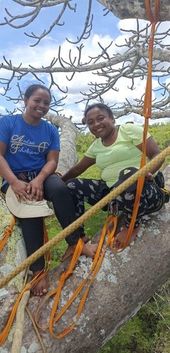
To answer these questions, an international team of botanists collected leaf and bark samples from 118 mature, seed-producing trees across four locations in northern Madagascar. Two of the study sites were inside national parks and protected areas (Beantely and Mahory). The other two were in unprotected landscapes more affected by human activities (Montagne des Francais and Ambilo). The team extracted DNA from each tree and used modern genomic tools to measure genetic diversity, which is the amount of genetic variation within and between populations.
Why does genetic diversity matter? Genetic diversity is like a toolbox for survival. Populations with high genetic diversity have more variation, giving them a better chance of adapting to diseases or climate change. Populations with low genetic diversity are more vulnerable and may struggle to survive during environmental changes. The researchers also looked for signs of breeding between closely related individuals, which is called inbreeding, that reduces fitness and survival.
No evidence of inbreeding, but low overall genetic diversity
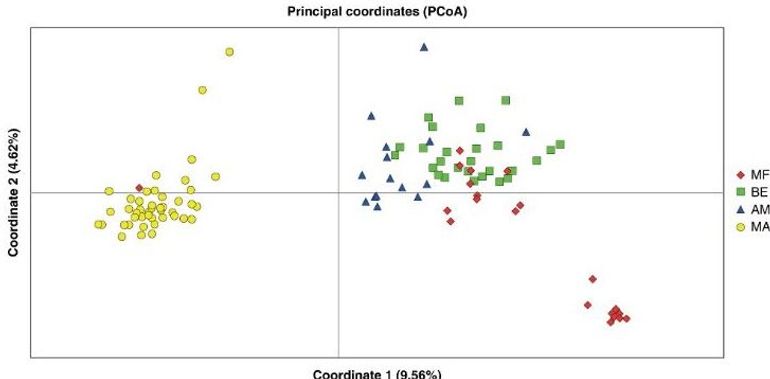
The good news: the study found no signs of inbreeding. The concerning news: genetic diversity within populations was low overall. This means the species may have limited capacity to adapt to future environmental changes. The study also found a strong geographic pattern, see the figure below. Trees from different locations were genetically distinct from one another, showing that populations are becoming increasingly isolated.
The pollinators are disappearing
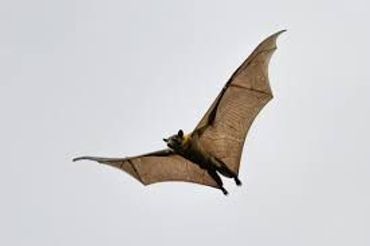
Baobabs rely on animals to move pollen between trees. The main pollinator of Adansonia suarezensis is the Madagascan fruit bat, Eidolon dupreanum. These bats can fly moderate distances and help connect separate baobab populations by carrying pollen from one tree to another. However, fruit bats are declining due to illegal hunting. Fewer bats means less pollen movement and greater genetic isolation between tree populations.
Seed dispersal broke down long ago
Baobab seeds are large and heavy. In the distant past, they were likely dispersed by Madagascar’s extinct giant animals, including enormous elephant birds and giant lemurs. After these giant animals disappeared, long-distance seed dispersal effectively stopped. Today, seeds usually fall close to the parent tree, limiting the spread of new populations. This historical loss continues to shape the species’ genetic structure today.
Young baobabs grow mainly in protected areas
Perhaps the most striking result concerns regeneration. Researchers counted all saplings and juvenile trees at each site. They found that natural regeneration was occurring mainly inside national parks and protected areas. In unprotected sites, there were far fewer young trees. This suggests that habitat protection directly affects whether the species can reproduce and replace older trees. Without young trees growing today, there will be no mature baobabs anymore in the future.
A window of opportunity
Baobabs are long-lived trees. Even if regeneration is currently low, many mature individuals are still standing. That gives conservationists a window of opportunity, but not an infinite one. Protecting habitats now could allow young baobabs to grow, maintain genetic diversity, and ensure that future generations can continue to admire these extraordinary trees. Without action, one of Madagascar’s most iconic species may quietly disappear. With action, it still has a chance.
More information
Text: Barbara Gravendeel, Hortus botanicus Leiden, the Netherlands; Juan Viruel, University of Saragossa, Spain; Onja Hariveloniaina Morilline Razanamaro, Parc Botanique et Zoologique de Tsimbazaza, Antananarivo, Madagascar
Images: Onja Hariveloniaina Morilline Razanamaro; CMM Teixeira