

Urban airborne allergenic pollen has a strong local effect
Hortus botanicus LeidenClimate change is causing a rise in temperatures, with cities warming even more because concrete and asphalt retain heat. More urban greenery can help cool cities through shade and evaporative cooling. However, some plant species produce allergenic pollen that becomes airborne and can cause hay fever symptoms. As part of the BENIGN project, we therefore investigated how cities can become greener and cooler without simultaneously increasing exposure to allergenic pollen.
Measuring pollen at street level
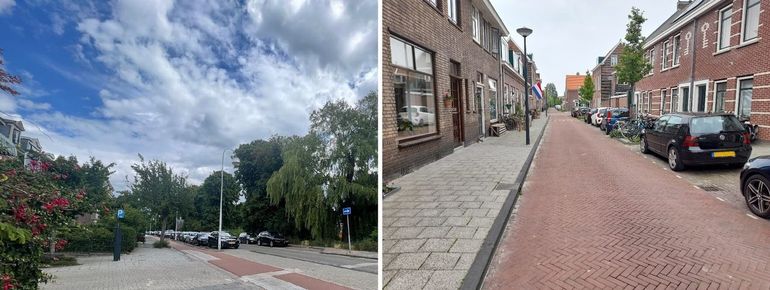
Pollen is generally monitored using regional monitoring stations, such as the one on the roof of Leiden University Medical Center (LUMC). These measurements provide insight into airborne pollen levels and composition across a region, but do not reveal local differences between streets and neighbourhoods. To investigate these local differences, pollen was measured at street level in Leiden twice a week for one year. Measurements were taken along the green Jan van Houtkade and in the less green Noorderkwartier neighbourhood.
Students from Leiden University of Applied Sciences walked through the streets carrying portable 'pollen sniffers'. These devices draw in air and capture pollen for further analysis. Microscopy was used to determine how much pollen was present, whereas DNA analysis helped identify the plant species from which the pollen originated. This allowed the researchers to determine the extent to which pollen abundance and composition differed between streets and which plants were the main sources of allergenic pollen.

More plants, more pollen?
The amount of pollen in the air differed considerably between the two study areas. On average, 56 percent more pollen was measured along the green Jan van Houtkade than in the warmer and more built-up Noorderkwartier, where there were fewer trees and other plants. However, more pollen does not necessarily mean a higher proportion of allergenic pollen. Although the total amount of pollen was higher along Jan van Houtkade, a larger proportion of the pollen in Noorderkwartier originated from allergenic species: 41.4 percent compared to 32.7 percent.
DNA analysis also showed that most allergenic pollen at the study sites originated from plants in public spaces, including street trees and grasses. Of the 322 identified plant species, 104 were allergenic. Only 6 of these were ornamental plants, including olive trees and ornamental grasses. The design of public green spaces therefore influences local exposure to allergenic pollen. Surprisingly, allergenic tree pollen was also detected outside the usual flowering period, including birch pollen as late as December. This shows that exposure to allergenic tree pollen can also occur outside the usual flowering season.
Municipalities can make a difference
The strong local variation in pollen levels and composition means that choices made at street and neighbourhood level matter. Municipalities do not need to reduce public green or remove existing trees, but they can make more informed decisions about which species to plant and where. Highly allergenic trees are best avoided in busy locations, such as public squares, school grounds, and frequently used walking and cycling routes. Regional guidelines such as the Bomenkompas voor allergeniciteit ('tree compass for allergenicity', in Dutch) can help municipalities take tree allergenicity into account when selecting species. Where appropriate, non-allergenic herbaceous plants can provide an alternative to lawns, thereby reducing exposure to grass pollen.
More information
- Read the whole published article: Urban airborne allergenic pollen shows highly local patterns correlated with public green spaces.
- This research was conducted as part of the NWO-funded BENIGN research project.
Text: Nemi Dorst, Hortus botanicus Leiden and Naturalis Biodiversity Center
Images: Nemi Dorst (lead photo: Closed catkins of Italian alder (Alnus cordata); Irene Kopelman; Ilse Thijssen