

In the footsteps of Wallace: tracing his expedition through his preserved bee specimens
Naturalis Biodiversity Center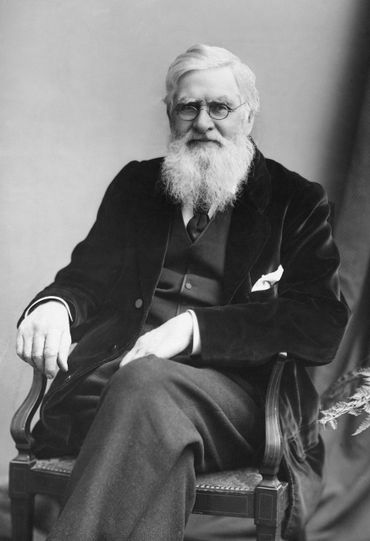
Today, January 8th, marks the 203rd birthday of Alfred Russel Wallace (1823-1913). Wallace was a pioneering British scientist and natural historian. He is most well known for being the father of zoogeography – measuring and understanding the geographical distribution of animals – and co-proposer of the theory of evolution along with Charles Darwin.
Wallace’s ideas about nature were strongly developed during his most famous expedition, that took place between 1854 and 1862. This expedition took him across Southeast Asia, from Singapore and the Malaysian Peninsula across to the island of New Guinea, including the large islands of Borneo and Sulawesi, as well as dozens of small islands in what is known today as Indonesia and Timor-Leste. The bees he collected on this expedition have now been photographed and presented in a single new publication.
The other orders
Wallace collected around 125,000 natural history specimens on his expedition. His greatest focus was placed on birds and insects, primarily butterflies and beetles. “Wallace was not particularly interested in what he called 'the other orders', including bees”, says Thomas Wood, researcher at Naturalis Biodiversity Center in Leiden, The Netherlands.
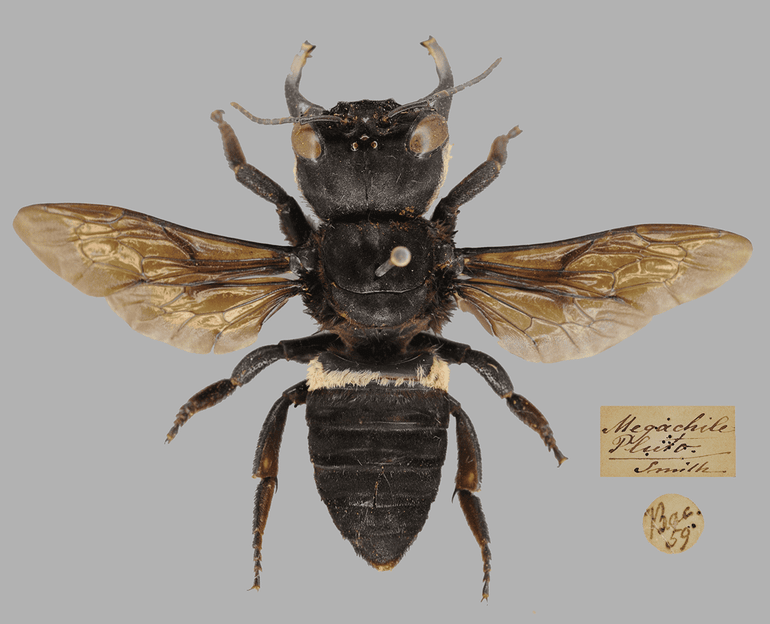
Despite this, Wallace collected many new bees for science, including the largest bee in the world, Megachile pluto, which is found in the northern Molucca islands. Wallace’s lack of interest was a blessing in disguise, as his bee specimens were mostly purchased by a single person, named William Wilson Saunders. He encouraged and enabled taxonomist Frederick Smith to describe all of them. The collection of Saunders was later purchased by the Oxford University Museum of Natural History in 1875.
Scientific benefits
This near-complete collection of bees has multiple scientific benefits. It serves as a historical record of which species were present on which islands 170 years ago. This helps scientists studying global changes in biodiversity. Furthermore, the collection helps to define what bee species are. “Because the specimens in the collection were used by a taxonomist to describe new bee species, we can use them as a special reference, called a type specimen. This gives scientists a consistent reference point for recognising different species”, says Wood. “Now that the collection, including these special type specimens, is photographed and made publicly available, scientists around the world can understand and communicate about these species more clearly”, says Wood. “By increasing our understanding of different species, the digitisation of natural history collections can aid global conservation efforts.”
Famous distribution patterns
Famously, Wallace observed geographical patterns of animal distributions. He was able to infer that some Southeast Asian islands had been connected by land in the recent past, while others must have been separated for a long time. This pattern can be seen in the bees Wallace collected. “One species, called Amegilla insularis, was described from Borneo, but it can also be found in Singapore, Peninsula Malaysia and on the island of Sumatra. In contrast, Amegilla vigilans, a related species, was described from Sulawesi and is only known from this island, even though Sulawesi is closer to Borneo than Borneo is to Sumatra”, explains Wood.
Although the bee specimens presented in this new catalogue are only a small fragment of the biodiversity collected and studied by Wallace, they are a colourful and irreplaceable piece of history. “Their presentation will facilitate the study of bees in Indonesia, which still has much undocumented and undiscovered biodiversity”, Wood concludes.
More information
- Read the original publication by Wood and his colleagues. Images of all bees in the collection are listed at the end of the article.
- Wallace's bee collection was displayed in the Oxford University Museum of Natural History in 2016. Visit the museum's website for more information on this display and the collection.
Text: Naturalis Biodiversity Center
Images: Oxford University Museum of Natural History (lead photo: Megachile pluto, copyright); London Stereoscopic and Photographic Company