

Coral trade: the silent killer of reefs?
Naturalis Biodiversity Center A quarter of all sea life is dependent on coral reefs. The corals of which they are made up serve as food, offer hiding spots, and provide places of growth for all kinds of animals. But they are also the target of fishing by the aquarium industry. This forms a traceless threat to the biodiversity of coral reefs. You can see dead corals, but once they are fished up there is no way to tell whether they have ever been there at all.
Coral-specialist Bert Hoeksema, guest researcher at Naturalis Biodiversity Center and professor of tropical biodiversity at the University of Groningen, dove into the records of the international coral trade. For corals these trace back to 1990, when they started being recorded by CITES: The Convention on International Trade in Endangered Species. The researcher used the records as an indicator of the popularity of specific corals. “The fishing of corals is very selective”, he states. “Some species are simply deemed more beautiful by aquarium owners. Those popular species especially are at a higher risk of overfishing.”
Craft of cultivation
The essential permits for traded corals differentiate between wild caught and cultivated. Coral cultivation is positive, as it takes pressure off of populations in the wild. Besides, it is not too difficult to do. Hoeksema explains: “Corals are animals, but they can behave like plants.” You can make cuttings. After sawing off pieces of coral and gluing them to small pedestals of rock or chalk they continue to grow. “That’s part of the natural healing process. Corals grow easily, as long as they have a place to start from.” After fishing usually nothing remains, therefore it is hard for the sea creatures to return.
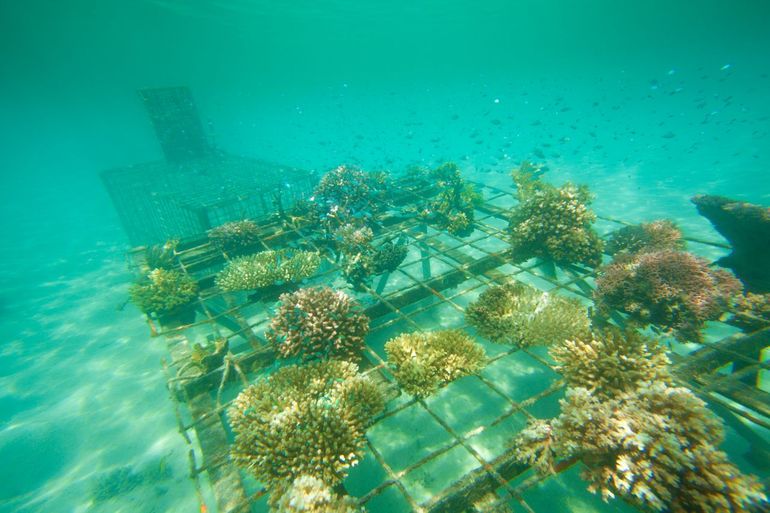
Even though not all corals are easy to cultivate, countries do do this – partly thanks to CITES – increasingly often. In 2017 more than half a million cultivated corals were traded. A positive development, thinks Hoeksema. Because permits for cultivated corals are easier to get, and export of wild-caught corals is inhibited by some countries, cultivation is more accessible to exporters. Besides, cultivating corals is more easily upscaled than targeted fishing.
Unbounded
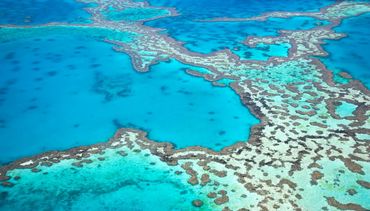
“That’s happening a lot in Indonesia right now”, knows the researcher. “Fishing decreases because of lower export quota, while coral cultivation keeps coming up.” For years, Indonesia was the biggest exporter of wild-caught corals, but now Australia stands far above the rest. Looking at the wealth difference between the countries you might expect it to be the other way around. It is also surprising because the Australians are meanwhile very invested in the fate of the Great Barrier Reef.
Most corals end up in rich western countries. The United States has always been the biggest importer. How many corals reach particular European countries is hard to say. The sea animals enter the Schengen Zone somewhere, but afterwards there is no sight on the distribution. Especially not on how many illegal corals enter each country. “CITES only registers the legal trade”, explains Hoeksema. “Sometimes illegal imports are intercepted by customs, but you don’t know whether every country checks equally rigorously.” The size of the illegal coral trade is unclear, as poaching and smuggling per definition happen under the radar.
Making a difference
For legally traded corals, the import permit has to specify whether it concerns wild-caught or cultivated corals. “The difference between the two is easily seen by aquarium owners”, says the researcher, “because of the pedestals on which cultivated corals are usually glued.” By looking for these the consumer can choose cultivated corals of their own accord.
Enforcement of the rules of international coral trade is impossible without trustworthy taxonomy. During both import and export the specific species have to be certain. “Some corals look a lot alike. They are sometimes confused by accident, but also sometimes on purpose.” Enforcement remains important because the long-term effects of coral fishing are still unclear. That is why Hoeksema hopes for more monitoring of the reefs where corals are fished. “Only by staying vigilant, we can see how damaging coral fishing is, and what we can do about it.”
More information
- Read the entire article here: An unseen threat to coral reef biodiversity: the international trade of live corals for the aquarium industry as reflected by CITES records (1990–2021).
- This article is the last of a trilogy on the CITES records. Previously published were, in collaboration with students, articles about sea horses and giant clams.
Text: Beau Bakker, Naturalis Biodiversity Center
Images: Bert Hoeksema (lead photo: Indonesian mushroom corals intercepted by customs. They were wild caught, but exported as cultivated); Getty Images; M. Evans, Getty Images