

Citizen science helps unravel habitat of new species of widow spider
Naturalis Biodiversity CenterFor a long time, biologists were in the dark about the spiders living in the mountains of South America, because widow spiders look very similar. To map out the habitat of a new spider species, researchers turned to the app iNaturalist. This is a platform similar to the European app ObsIdentify, where anyone can share photos of plants and animals.
Naturalis researcher Jeremy Miller described the new species from specimens collected in Peru. He and his colleagues then reviewed thousands of iNaturalist photos from countries like Peru, Ecuador, Bolivia, and Chile. By meticulously studying the physical characteristics in the images, such as the specific shape of the egg sac and the amount of white on the males' backs, they found dozens of records of the new species. Thanks to this 'citizen science', we now know that the spider species mainly occurs in the warm, temperate valleys of the Andes.
Small but venomous
Like all widow spiders, L. lucacha is 'medically relevant', which is science-speak for 'so venomous you’ll need a doctor if it bites you'. Local doctors in Peru know that a bite from this spider causes a sharp, radiating pain and severe muscle cramps in the abdomen and chest. Fortunately, the spider is not aggressive, and there are no known fatalities. The spiders mostly crawl around in agricultural fields, where they catch insects like beetles and damselflies.
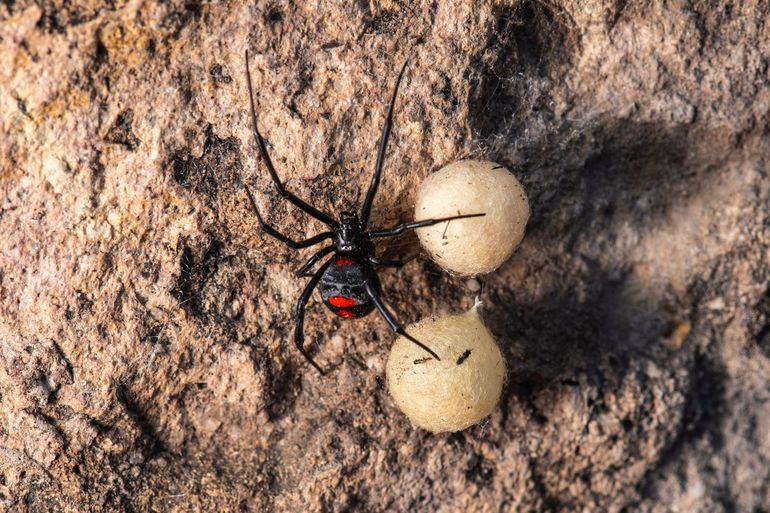
The spider has been officially named Latrodectus lucacha, after the local word for widow spiders in Peru. The study was recently published in the scientific journal ZooKeys. The females of L. lucacha are dark brown to black with a striking red stripe on their abdomen. On their underside, they feature a red, hourglass-shaped mark. The males are much smaller and mostly white.
New resource for expanding scientific knowledge
Jeremy Miller is not just a 'spiderman' or arachnologist. His work also focuses on what AI can and cannot do for species recognition and, from there, nature conservation. A lot of his time goes into studying species that are too small or too similar to be distinguished by smartphone pictures. To underline this challenge in his researches, Miller is also working on highly photogenic species, like L. lucacha.
"As biodiversity scientists operating in the 21st century, we’re concerned with where species live and whether this is changing. We scientists are few, but our citizen allies are practically everywhere. Citizen science communities, such as iNaturalist and Waarneming.nl, have generated an unprecedented library of images and observational records. I’m interested in exploring how institutional scientists can use this new resource creatively to gain insights and knowledge.
More information
- Read the publication Description of a new Andean species of widow spider (Araneae, Theridiidae, Latrodectus) in scientific journal ZooKeys.
Text: Naturalis Biodiversity Center
Images: Esteban Poveda (lead image: this observation photo of Latrodectus lucacha was uploaded to the photo database of iNaturalist and thus useful for determining the new species' habitat); Kabir Montesinos