

The Aruban praying mantis is new to science
Naturalis Biodiversity CenterSince 2009, the European mantis has been present in Limburg. This species migrated into the Netherlands due to the warming climate and now appears to be permanently established. In 2025, a second species of mantis for the Kingdom of the Netherlands was discovered 8,000 kilometers away on the island of Aruba. Recent research has shown that this is, in fact, an undescribed species.
Aruba, Bonaire, and Curaçao are located off the coast of Venezuela and boast a warm climate perfectly suited for praying mantises. Despite this, no mantises had ever been found there until recently. The first clues of their presence on Aruba were a few photos published on iNaturalist – but the exact species could not be identified from the images.
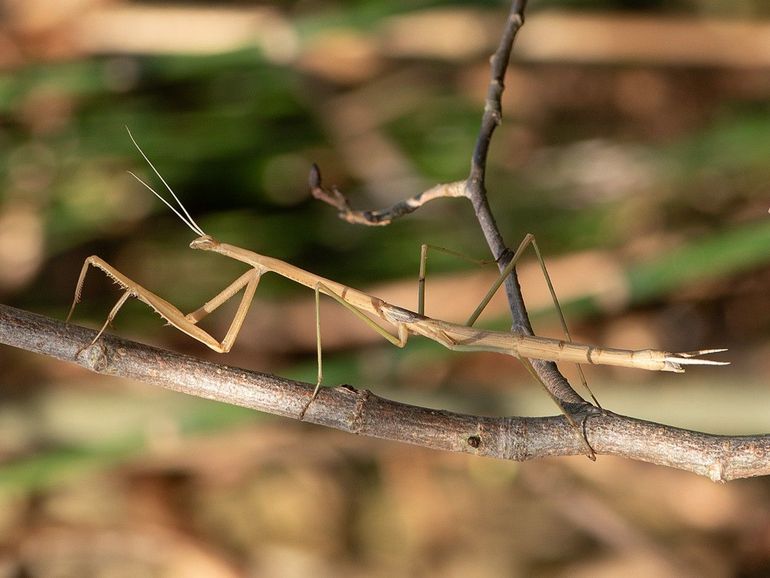
A New Species
In February 2025, volunteers from Naturalis Biodiversity Center and members of the Netherlands Entomological Society collected a total of four specimens from various locations. A study of the collected insects revealed that they represent a species new to science. American expert Kris Anderson, a specialist in Caribbean mantises, described the species and named it Brunneria xerophila. The epithet ‘xerophila’ is Greek for ‘lover of dryness,’ referring to the warm, arid vegetation where this species is found on Aruba. The common name would be Aruban praying mantis.
Characteristics
With their strange triangular heads and folded forelegs, praying mantises are among the most characteristic and recognizable insects.
- Movement: they walk on their four hind legs.
- Hunting: they use their front pair of legs to catch other insects.
- The 'Prayer': in a resting position, these two legs are held up and pressed together, resembling the act of praying.
While mantises are large insects, their camouflage and slow movements often make them difficult to spot in the vegetation. Worldwide, only about 2,400 species are known – compared to hundreds of thousands of beetle species. Due to their size and the relatively low number of species, they are among the best-known and most studied insect groups. Mantises thrive in heat, and the majority of species are found in the tropics.
Only on Aruba?
It is rare for a new insect species from the Kingdom of the Netherlands to be described, especially one that is relatively large and striking. Currently, there are only a handful of recorded sightings of the Aruban mantis. However, it is suspected that the species is quite widespread across the island. As far as is currently known, this species occurs only on Aruba, though fieldwork in neighboring parts of Venezuela is needed to confirm this.
The fieldwork conducted on Aruba is part of a collaboration between the Aruba Conservation Foundation (ACF) and Naturalis Biodiversity Center to better map the island's fauna. Fieldwork carried out by volunteers has already led to the discovery of many invertebrates new to Aruba, including several species of grasshoppers, spiders, and true bugs that are new to science.
More information
- Publication: Two New Species of Brunneria Saussure, 1869 (Mantodea: Coptopterygidae) with Novel Diagnostic Characters and a Key to the Species (pdf: 8,3 MB).
- Read about the work of the Aruba Conservation Foundation.
Text: Vincent Kalkman and Luc Willemse, Naturalis Biodiversity Center
Images: Steven IJland; Mathijn Speelman