

What an honor! Antlion named after Naturalis collection manager
Naturalis Biodiversity Center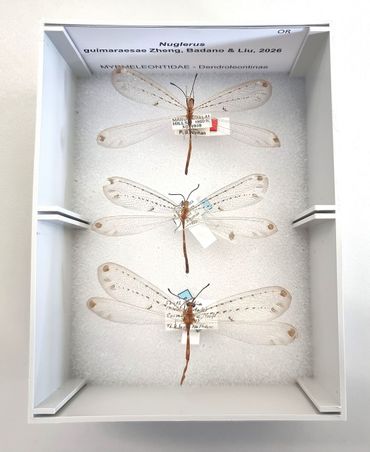
New species, new name
Researcher Yuchen Zheng visited Naturalis as part of his research on antlions – insects belonging to the same order as lacewings. Mónica Guimarães Cruz, curator of part of the Naturalis insect collection, assisted him in working with the collection. "He came here to photograph all the Asian antlions and offered to identify any specimens that hadn't yet been classified", Mónica explains. Ultimately, three specimens turned out to belong to a new species. When it came time to name the species, Yuchen decided to name it after Mónica: Nuglerus guimaraesae. "It is a tremendous honor to have a species named after you."
Name riddle
When a new species is described, it naturally needs to be given a name. But how does that work? Often, the name is based on physical characteristics, such as color or size, specific behaviors, or the place of origin. However, it can sometimes be difficult to come up with original names for species that are very similar. Partly for this reason, species are also named after people. This could be a celebrity or someone the discoverer wishes to honor. "I find it very hard to say in advance who I would name a species after", Mónica adds. "If I were to name something after someone, that person would need to have a specific connection to the species."
Importance of the manager
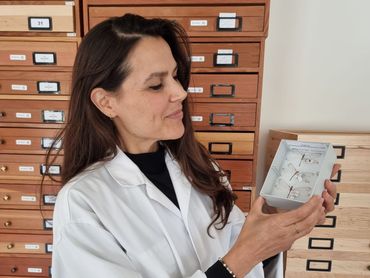
"He did it as a gesture of gratitude for the work I did to enable him to study the collection", Mónica explains. "It is a real honor for me. But it is also a validation of the importance of collection managers." The role of a collection manager involves organizing the collection, preserving it for the future, and ensuring it is properly maintained. However, a key objective is also to make the collection available for research. "And so, it is wonderful to see that a new species has been described for science based on the collection."
More information
Text: Amélie Fortuin, Naturalis Biodiversity Center
Images: Yuchen Zheng; Amélie Fortuin