

Urban birch pollen doesn’t fall far from the tree
Hortus botanicus LeidenHow local is birch pollen?
Trees are important for healthy and cool cities, but some species produce highly allergenic pollen. In the Netherlands, birch pollen is considered the most allergenic tree pollen. Exposure can cause hay fever symptoms in people who are allergic to birch pollen. Birch pollen can be dispersed over long distances by wind. It was therefore unclear how much birch trees in the immediate surroundings contribute to pollen levels at street level. Is the pollen in a street mainly produced by local trees, or does a substantial proportion originate from birches growing farther away? We therefore investigated whether the amount of airborne birch pollen differed between streets with a different number of birch trees, as well as how the amount of pollen changes with increasing distance from a flowering birch tree.
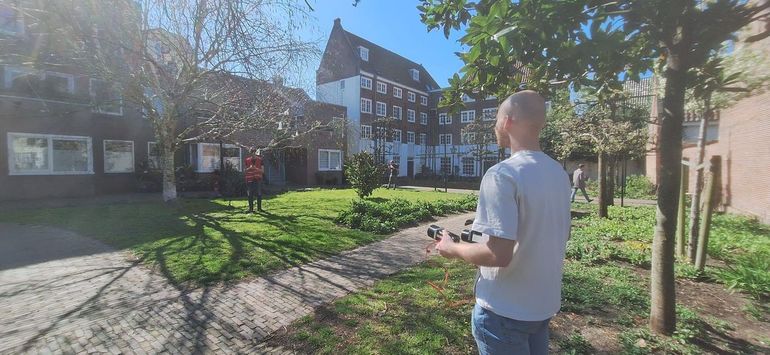
Measuring pollen locally with Pollensniffers
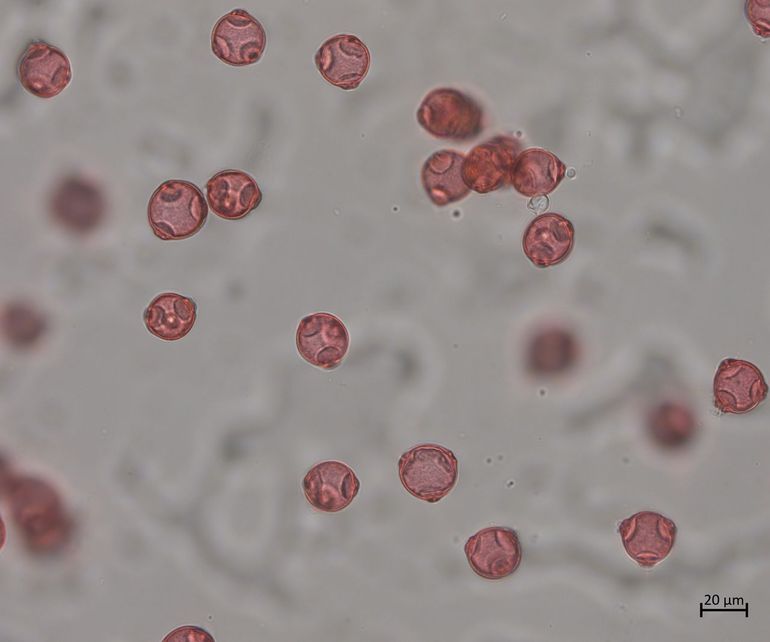
To investigate how birch trees in the immediate surroundings contribute to airborne pollen levels, measurements were taken at several locations in Leiden using portable pollensniffers. During the flowering period of Himalayan birch in spring 2025, pollen was collected on eleven days around two adjacent Himalayan birch trees (Betula utilis) in Gekroonde Liefdepoort, an enclosed courtyard in Leiden. Measurements were taken directly next to the trees and at distances of 10 and 25 metres. One year later, we investigated how the number of birch trees in a street relates to the local amount of birch pollen. Measurements were taken simultaneously for ten days in three streets: one without birch trees, one with a single birch tree and one with fourteen birch trees. Light microscopy was used to determine how much birch pollen had been collected.
More birch trees, more pollen
Significantly more birch pollen was measured in the street with fourteen birch trees than in the streets with one or no birch trees. No significant difference was found between the street with a single birch tree and the street without birches. On the peak day, 2.6 times more birch pollen was measured in the street with many birches than the highest amount recorded in either of the other two streets.
Distance from the tree matters
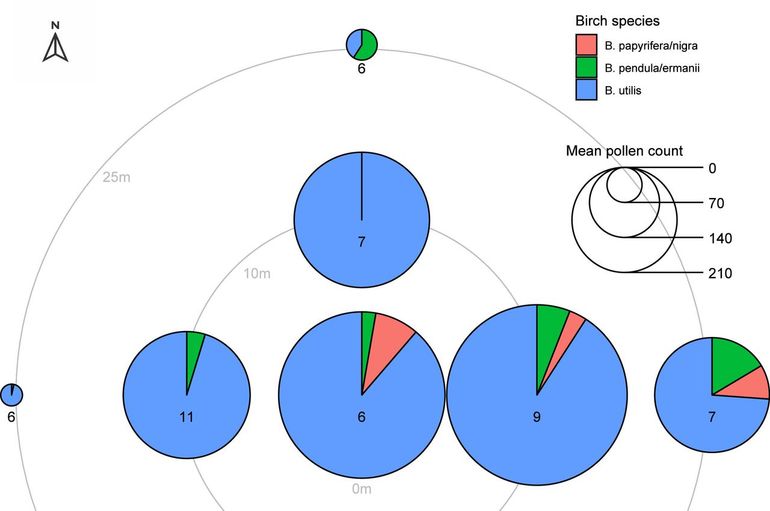
Distance from a flowering birch tree also had a clear effect on the amount of birch pollen in the air. Similar amounts of birch pollen were measured directly next to the trees and at a distance of 10 metres. At 25 metres, however, the average amount of birch pollen was 78 percent lower than at 0 and 10 metres. Pollen dispersal was also influenced by the urban environment. In the walled courtyard, wind circulated between the surrounding buildings, causing the local wind direction to differ from the regional wind direction. This may cause pollen to disperse differently at the local scale and potentially remain near the source for longer. During peak days, high amounts of birch pollen were still detected at a distance of 25 metres.
DNA confirms local origin
Pollen from different birch species is difficult to distinguish under a microscope. Additional DNA analysis allowed us to distinguish pollen from the local Himalayan birches from pollen of other commonly planted birch species in Leiden, such as silver birch (B. pendula). Around the Himalayan birches at the study site, an average of 84 percent of the birch DNA was identified as Himalayan birch. Even at a distance of 25 metres, most of the identified birch pollen was still from Himalayan birch, although this is not the most common birch species in Leiden. This confirms that individual trees can make an important contribution to the amount of birch pollen in their immediate surroundings.
The right tree in the right place
The results do not mean that municipalities should plant fewer trees or remove existing birches. Because the study was conducted at a limited number of locations, we cannot determine whether the differences we measured would be equally large at other locations. However, we expect that around other birch trees, the amount of birch pollen will also decrease with increasing distance from the tree. How pollen disperses locally also depends on the urban environment and local airflows. We therefore recommend giving preference to non-allergenic or low-allergenic tree species when planting new trees. Highly allergenic trees, such as birches, should preferably not be planted together in large numbers, as this increases local exposure to birch pollen. We also recommend planting birches at least 25 metres away from locations that people cannot easily avoid, such as schools and hospitals. In this way, the benefits of urban greening can be combined with limiting local exposure to allergenic pollen.
More information
- Article: Airborne birch pollen dispersal in an urban setting – case study
- This research was conducted as part of the NWO-funded BENIGN and ZonMW-funded GoHot research projects.
Text: Nemi Dorst en Barbara Gravendeel, Hortus botanicus Leiden en Naturalis Biodiversity Center; Anne Overduin - de Vries, Leids Universitair Medisch Centrum
Images: Anne Overduin - de Vries (leadfoto: Himalayan birch along the Blauwe Vogelweg in Leiden); Letty de Weger; Martijn van de Velde; Overduin - de Vries en collega's